Workplace psychometric assessments allow organizations to identify candidates with personality traits and competencies that go beyond what a résumé can reveal. For example, emotional intelligence assessments evaluate an individual’s ability to work under pressure, make effective decisions, and adapt to an organization’s culture.
Today’s workplace requires leaders with different capabilities than those valued in previous years. Finding individuals with strong learning abilities, adaptability, and a proactive approach to conflict resolution is essential for building successful teams and sustainable organizational dynamics.
In this article, we explore aptitude tests and intelligence assessments that are fundamental to recruitment processes focused on identifying and developing leaders in modern organizations.
Defining Leadership in Business Terms
In the business environment, leadership goes far beyond holding a position of authority or having the title of “manager.” A true leader is someone capable of guiding teams and making difficult decisions while continuing to inspire, motivate, and encourage the growth of others.
Leaders must act as catalysts for change, think creatively, and focus on the organization’s future by empowering those around them. Some of the ideal characteristics of an effective leader include:
- Ability to Inspire and Motivate Others Beyond achieving collective goals, a strong leader builds trust and encourages each team member and collaborator to develop their full potential.
- Strategic Decision-Making A leader must be capable of making decisions that positively influence the organization’s long-term success, even under pressure, while maintaining awareness of daily challenges.
- Promoting Employee Development An effective leader understands that the individual growth and professional development of team members benefits the entire organization and actively seeks tools and opportunities to support it.
- Managing Conflicts and Change A successful leader can handle conflicts effectively, embraces change, and motivates their team during unexpected transitions while maintaining a stable, productive, and positive work environment.
The characteristics of an effective leader vary depending on company culture and the specific challenges each organization faces. However, these traits should be carefully considered during recruitment processes.
For this reason, implementing personality psychometric assessments is essential for identifying the best candidates for leadership roles.

The Role of Psychometric Assessments in Identifying Leaders
Personality psychometric assessments are an excellent complement to general aptitude or analytical tests. These evaluations help organizations understand how an individual thinks, behaves, and interacts with others—qualities that are essential when identifying leadership potential.
There are several aspects to consider when searching for future leaders, ranging from analytical and synthesis abilities to how an individual may respond to specific organizational challenges. Emotional intelligence, teamwork orientation, and decision-making ability are just some of the most significant characteristics when evaluating leadership capabilities.
Measuring Emotional Intelligence
Emotional intelligence is crucial for leaders because it directly impacts their ability to manage teams, make decisions under pressure, and maintain positive workplace relationships. Psychometric assessments help measure these abilities, providing valuable insights into how a potential leader may influence, motivate, and support others.
Evaluating Leadership Styles
Every leader has a unique leadership style, and its effectiveness depends on the organizational environment and the characteristics of the team they lead. Psychometric assessments help identify these styles by evaluating how a leader communicates, delegates responsibilities, and makes decisions. This allows organizations to determine whether a candidate’s capabilities and leadership approach align with the company’s culture and requirements, or whether additional training, mentoring, or support may be beneficial.
Analyzing Decision-Making Skills
Decision-making ability is one of the most important competencies in leadership. Psychometric assessments can reveal how candidates analyze information, evaluate risks, prioritize objectives, and respond to complex situations.
Understanding these patterns helps organizations identify leaders who can make strategic decisions while balancing business goals, team needs, and long-term organizational success.
Types of Psychometric Assessments and Examples of Evaluations
Psychometric assessments used to evaluate potential leaders measure both personality traits and cognitive abilities.
Emotional Intelligence Tests
These assessments evaluate how a candidate perceives, uses, understands, and manages their own emotions and those of others. A common example is the MSCEIT (Mayer-Salovey-Caruso Emotional Intelligence Test), which uses hypothetical situations to assess different dimensions of emotional intelligence, including emotional perception, understanding, and management.
Personality Inventories
A well-known example of this type of assessment is the MBTI (Myers-Briggs Type Indicator) or the Big Five personality model. These tools classify personal characteristics into different types or traits, helping organizations understand how individual tendencies may influence leadership potential, communication styles, and decision-making approaches.
Assessment Centers
Assessment centers use a series of simulations and exercises that replicate real workplace situations to observe leadership skills in action. These activities may include: Role-playing exercises Case studies Group projects Problem-solving scenarios These evaluations provide practical insights into how candidates lead, collaborate, communicate, and respond to complex situations.
At Evalart, we offer a catalog of assessments that allows recruiters to evaluate different characteristics and competencies of candidates throughout the selection process.

Benefits of Psychometric Assessments for Hiring and Leadership Selection
Implementing psychometric assessments in recruitment and selection processes improves hiring quality and helps organizations identify candidates with leadership potential. These evaluations allow companies to build teams with professionals who can adapt, develop, and drive the changes necessary for long-term success.
Improving Recruitment Quality
Psychometric assessments provide objective data that complements interviews, résumés, and professional experience. By evaluating cognitive abilities, personality traits, and behavioral tendencies, organizations can make more informed decisions and identify candidates whose profiles align with the requirements of leadership roles.
Leadership Development
Psychometric assessments help organizations understand a candidate’s strengths, areas for improvement, and the specific development opportunities needed to help them grow into an effective leader.
Organizational Alignment
Psychometric assessments help ensure that selected leaders are aligned with the company’s culture, values, and strategic objectives. This alignment is essential for long-term success, as effective leaders must not only achieve results but also reinforce the organization’s vision and workplace environment.
Online Assessments with Evalart
Evaluating candidates with Evalart is simple and efficient. The entire process consists of four steps: Select the assessment or assessments you want to use according to the competencies and requirements of the position. Create an evaluation process and send the assessments to candidates. Candidates complete the questionnaires through the online platform. Review results immediately from Evalart’s dashboard and use the insights to make informed hiring decisions. To learn more about how the platform works, consult our available information and discover how Evalart can support your recruitment processes.
You can also explore our assessment library and experience firsthand how simple and effective Evalart is to use.
Evalart’s psychometric assessments are a transformative tool for organizations that implement them strategically. By combining objective data with a deeper understanding of candidate profiles, companies can identify, develop, and retain leaders capable of driving future success.
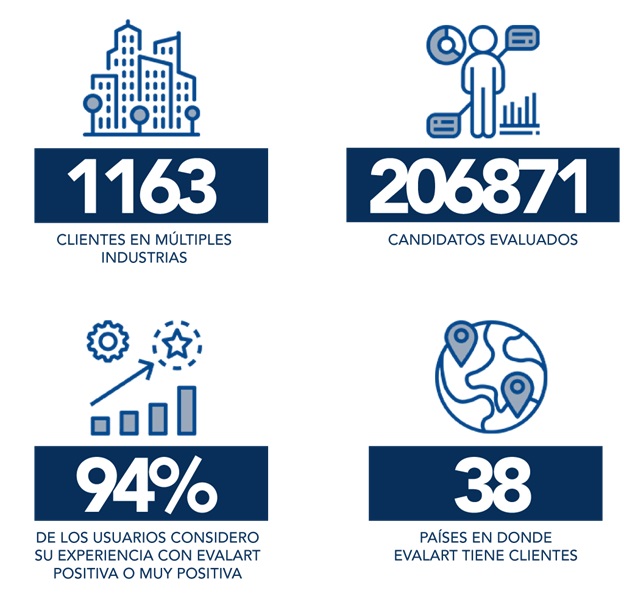
Evalart in Numbers