How to Formulate Interview Questions to Reduce Bias and Improve Decision-Making

Knowing how to formulate interview questions is just as important as knowing what to evaluate. A poorly structured question can prompt superficial answers, activate unconscious biases, or steer the conversation toward irrelevant topics.

A well-formulated question, on the other hand, reveals actual behaviour, analytical ability, and alignment with the role.

The difference does not lie in the interviewer’s intuition, but in the method used.

Entrevistadora conversando con candidato en oficina mientras aplica metodología sobre cómo formular preguntas en una entrevista

How to Formulate Interview Questions

Formulating effective questions involves three key elements: structure, intention, and evaluation criteria.

One of the most widely used methods is the STAR model: Situation, Task, Action, and Result. This approach requires candidates to describe specific events rather than offer general opinions.

For example, instead of asking, “Are you good at solving problems?”, a question structured according to the STAR model would ask the candidate to describe a specific situation, the responsibility they assumed, the actions they took, and the result they achieved.

This approach is directly connected to the objective assessment of competencies. To learn more about measuring skills in a structured manner, you can read this guide on workplace competencies and skills and how to evaluate them objectively.

When questions are aligned with previously defined competencies, the interview becomes less subjective.

What Questions Are Asked in an Interview?

Interview questions can be classified into three main categories:

  1. Behavioural:
    These questions focus on past experiences and seek concrete evidence of actual behaviour.
  2. Situational:
    These questions present hypothetical scenarios to evaluate decision-making.
  3. Technical:
    These questions assess specific knowledge applied to the role.

A common mistake is to mix categories without a clear purpose or to ask overly broad questions. Questions such as “Tell me about yourself” provide little predictive value when they are not connected to clearly defined criteria.

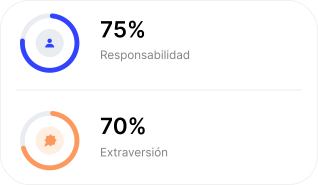
For this reason, many companies complement interviews with technical or psychometric tests that allow them to compare candidates’ answers with measurable data. You can explore different assessment options in our test catalogue.

Interviews become more precise when supported by prior evidence.

Equipo de recursos humanos revisando información en laptop como parte del proceso de cómo formular preguntas en una entrevista estructurada

What Are the Three Cs of Interview Questions?

A practical framework for formulating questions is to apply the three Cs:

Clear: The question should be direct and specific. Ambiguity produces ambiguous answers.

Concrete: It should request real examples rather than general opinions.

Comparable: The same question should be applicable to all candidates under the same criteria.

When questions are not comparable, the process loses objectivity. This approach becomes stronger when it forms part of structured talent planning. You can learn more about integrating assessments and data into a broader strategy in this article on data- and assessment-based organisational planning.


Common Mistakes When Formulating Questions

Even experienced interviewers can make mistakes that affect the objectivity of the process. Asking questions is not simply a matter of having a conversation; it requires applying a technique.

The most common mistakes include:

  1. Leading questions
    Example: “We work under a lot of pressure here. That would not be a problem for you, would it?”
    This type of question encourages candidates to provide the socially expected answer rather than an honest one.
  2. Questions that are too broad or ambiguous
    “Tell me about yourself” often produces generic answers that do not allow specific competencies to be evaluated. Without defined criteria, responses become difficult to compare across candidates.
  3. Improvising without a clear job profile
    When critical competencies have not been defined in advance, the interview becomes an intuitive conversation rather than a structured assessment.
  4. Evaluating candidates based on affinity or personal style
    One of the most common biases is favouring candidates whose styles resemble that of the interviewer. Without comparable questions and clear criteria, this bias may go unnoticed.
  5. Failing to connect questions with prior evidence
    When candidates have already completed technical or psychometric tests, the interview should explore those results in greater depth. Ignoring this information wastes an opportunity to conduct a more precise analysis.

Avoiding these mistakes requires structure, training, and tools that allow responses to be compared using the same parameters.

How to Integrate Structure and Data into the Interview

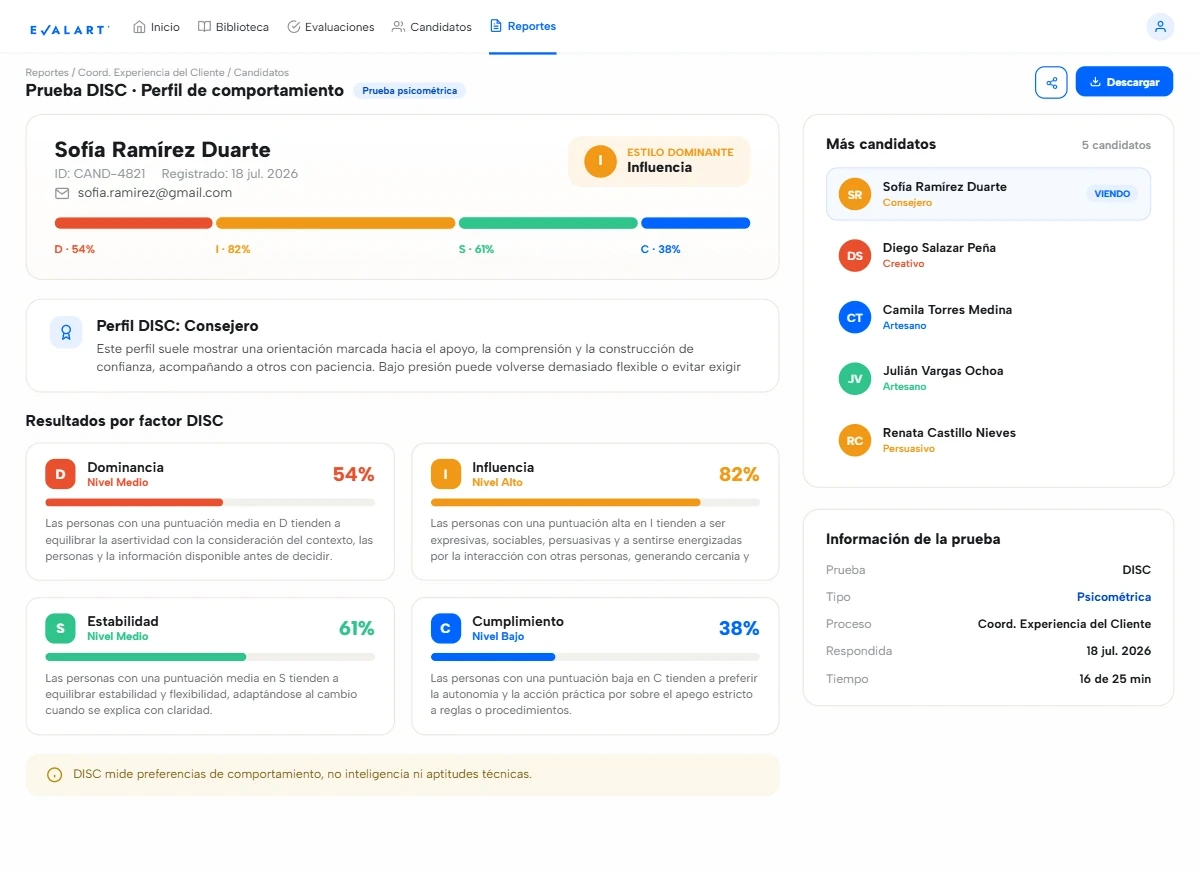
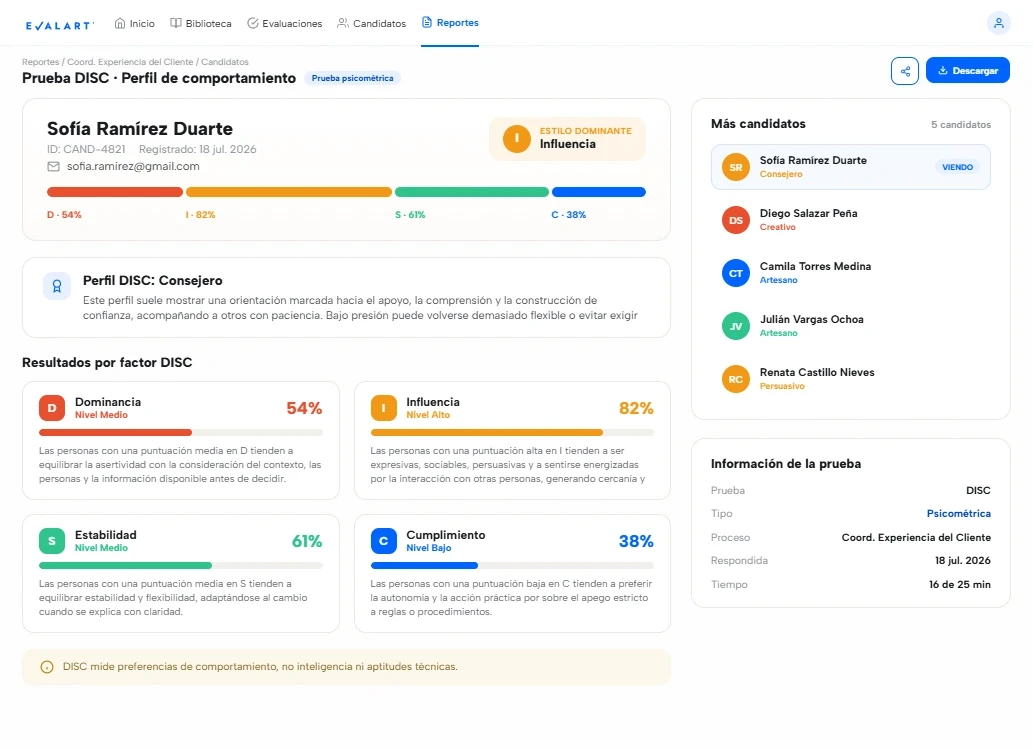
A truly effective interview does not operate in isolation. It should be integrated into a structured, data-supported recruitment process.

When the following elements are combined:

  • Previously defined competencies.
  • Objective assessments.
  • Questions formulated using models such as STAR.
  • Comparable criteria across candidates.

Decision-making becomes more consistent and less dependent on intuition.

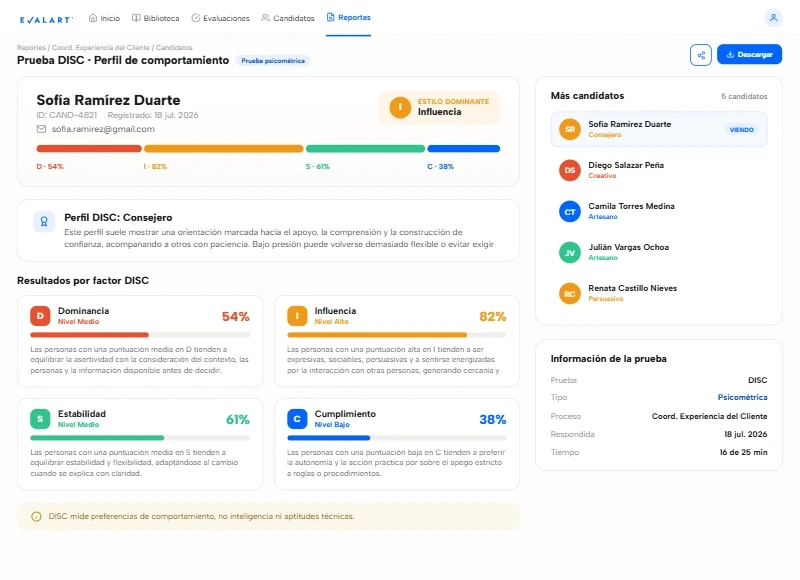
Technology facilitates this process by centralising results, enabling comparisons, and reducing improvisation. In this way, the interview no longer depends exclusively on the interviewer’s perception and becomes a strategic validation tool.

Reducing bias does not mean eliminating human judgement; it means supporting it with methods and data.

When structured interviews are combined with objective assessments and technology that centralises results, decisions become more consistent.

If your team wants to professionalise its interviews and better structure its recruitment process, you can begin by trying a solution designed for this purpose with a free Evalart trial.

Other similar news articles

Key psychometric tests for your recruitment process

Key Psychometric Tests | Hire the Right Talent Are you looking for a more effective way to choose the best talent from the beginning of…

Read More
Creating Excellence in Hospitality: Hiring a Hotel Manager with Exceptional Skills

Running a successful hotel requires more than just beautiful decor and luxurious amenities. At the heart of any thriving hospitality business is an effective hotel…

Read More
Corporate values: the key to good leadership.

When employees of a company share a common belief, it is more likely that they will work well as a team. Leadership based on values…

Read More