What Should You Ask in a Job Interview to Evaluate Beyond the CV?

Knowing what to ask in a job interview can make the difference between a strategic hire and a decision based on intuition. A CV presents a candidate’s experience; the interview should reveal how they think, make decisions, and act.

The problem is that many interviews are still improvised. Without structure or clear criteria, they become pleasant conversations with little predictive value.

An effective interview should assess past behaviour, analytical ability, and alignment with the role.

Reclutadora realizando entrevista presencial para definir qué preguntar en una entrevista de trabajo y evaluar competencias del candidato

How to Conduct a Valuable Job Interview

When evaluating real competencies, behavioural questions are often more useful than generic ones. Instead of asking, “Are you good at working under pressure?”, it is better to request evidence.

Examples of behavioural questions:

Tell me about a situation in which you faced a complex problem. How did you solve it?
Describe a time when you made a significant mistake. What did you learn?
How do you prioritise tasks when working with tight deadlines?
Tell me about a workplace conflict and how you managed it.

This approach is aligned with competency-based assessment models, which connect interview questions with observable workplace behaviours. To explore this model in greater depth, you can review the advantages and limitations of competency-based assessment in this article.

The interview becomes less subjective when each question is linked to a previously defined competency.

Candidata respondiendo preguntas en laptop durante proceso de selección enfocado en qué preguntar en una entrevista de trabajo

What Should You Ask in a Technical Job Interview?

For technical roles, questions should go beyond theoretical knowledge. The objective is to evaluate how candidates apply what they know.

Examples:

Explain how you would solve this practical case.
What steps would you follow to diagnose this problem?
How do you verify that your solution works correctly?
Tell me about a technical project that went wrong. What did you do afterwards?

Technical interviews work best when combined with standardised tests. Standardised assessments in HR make it possible to compare candidates using the same criteria and reduce bias.

Additionally, incorporating the results of a psychometric assessment can help guide the conversation. For example, if a test indicates strong attention to detail but low tolerance for ambiguity, the interview can explore situations involving uncertainty. Here, you can learn more about how psychometric assessment works in recruitment.

What Are 20 Key Questions for a Job Interview?

The following list combines behavioural, situational, and technical questions:

  1. What has been your greatest professional achievement?
  2. Describe a failure and what you learned from it.
  3. How do you handle pressure?
  4. Tell me about a workplace conflict.
  5. How do you prioritise multiple tasks?
  6. What motivates you professionally?
  7. How do you react to unexpected changes?
  8. Describe a difficult decision you have made.
  9. How do you give negative feedback?
  10. How do you receive criticism?
  11. Tell me about a complex project.
  12. What would you do if you disagreed with your manager?
  13. How do you work as part of a team?
  14. What do you do when you do not know something?
  15. How do you ensure quality in your work?
  16. What metrics do you use to measure your performance?
  17. How do you manage recurring mistakes?
  18. Describe a time when you demonstrated leadership.
  19. How do you handle difficult clients?
  20. Why should we hire you?

These questions become truly powerful when they form part of a structured, technology-supported process. Tools that integrate assessments, compare candidates, and centralise results help make interviews more objective. You can learn more about the features Evalart offers here.

How to Make Interviews More Effective

The key is not to ask more questions, but to ask questions aligned with data. Knowing what to ask in a job interview is not merely an interviewer’s skill; it is part of a data-driven recruitment strategy.

When interviews are combined with psychometric and technical assessments, the analysis becomes more comprehensive. Intuition remains important, but it is now supported by evidence.

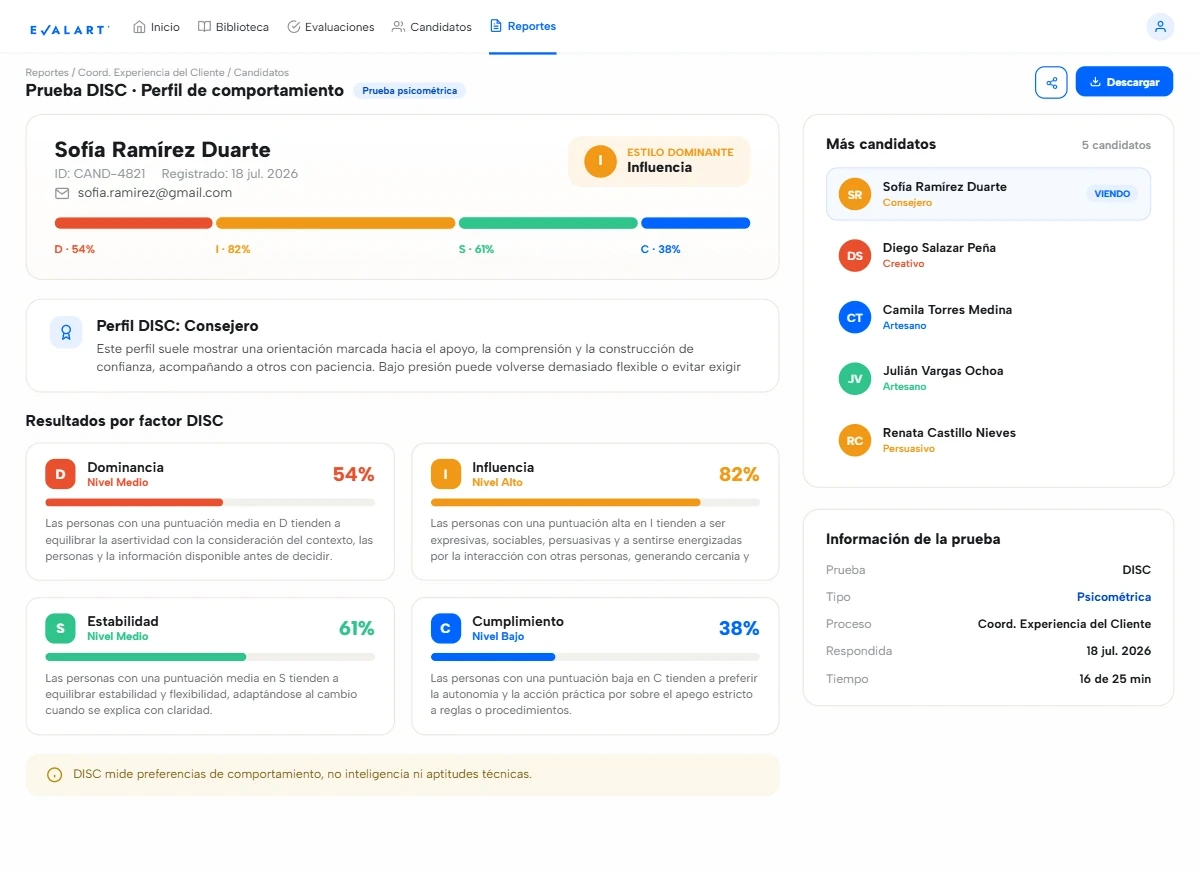
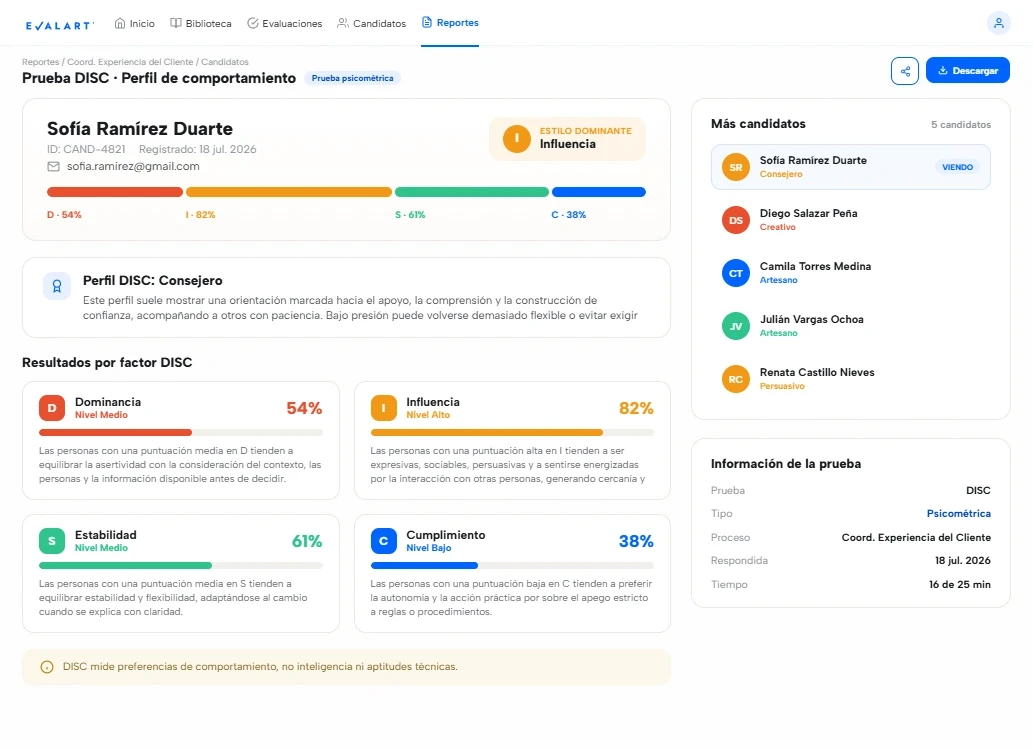
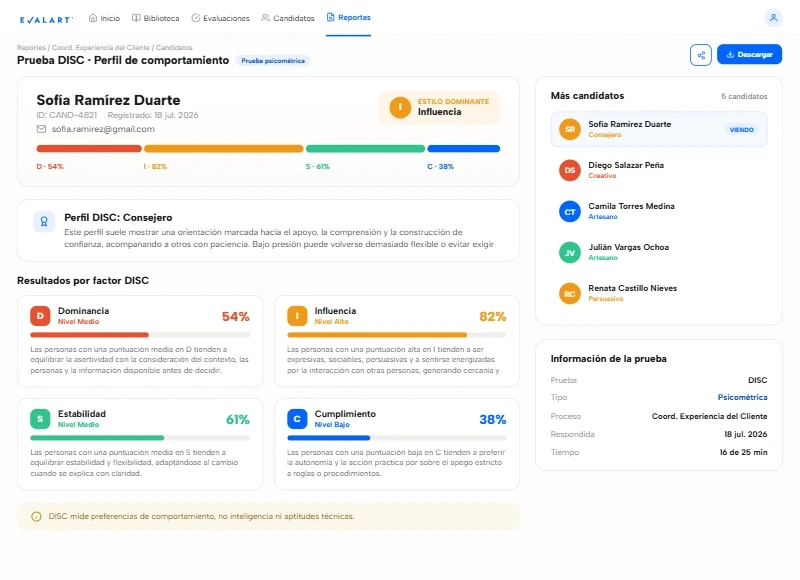
If your company wants to professionalise its interviews and make decisions with greater confidence, you can begin by trying a structured solution with Evalart. You can request a free trial here.

Other similar news articles

Why Is Background Screening Important in Hiring? | Candidate Assessment Tools

Why Is Background Screening Important in Hiring? Whether you're a dedicated hiring manager or a hands-on business leader, understanding the importance of background screening in…

Read More
How to use Evalart’s personality tests for selection processes?

Currently, personnel selection is considered the most important investment a company can make in the Human Resources field, as errors in this area are common…

Read More
How to Test Microsoft Azure Knowledge in Interviews

How to Test Microsoft Azure Knowledge in Interviews Hiring the right people is pivotal to the success of any organisation, particularly in technical roles where…

Read More