Effective Strategies for Staff Recruitment in 2026
Recruiting top talent today requires more than just posting a job opening and waiting for applications. Evolving work environments, the rise of remote work, shifting candidate expectations, and fierce competition for specialized roles have transformed how organizations attract, evaluate, and hire talent.
In this practical guide, we will explore staff recruitment strategies that work in 2026—from building a strong employer brand to utilizing technology smartly, tracking high-impact metrics, and employing tactics to attract both active and passive candidates.

What Are the Best Strategies for Staff Recruitment?
1. Define Your Employer Value Proposition (Employer Branding)
Before searching for talent, your company must establish a clear value proposition that answers one key question: “Why would someone want to work here?”
A strong employer brand helps you:
- Differentiate yourself from competitors.
- Build trust from the very first interaction.
- Attract candidates who share your values and culture.
In practice, this includes:
- Sharing your authentic culture and benefits across social media and your website.
- Publishing employee testimonials.
- Highlighting internal projects, social impact, and professional growth opportunities.
2. Leverage Technology to Optimize Every Stage
Technology is your greatest ally in streamlining recruitment. Key tools include:
Applicant Tracking Systems (ATS):
These platforms centralize applications, allow you to set filters, manage recruitment stages, and automate communications.
Automated Testing:
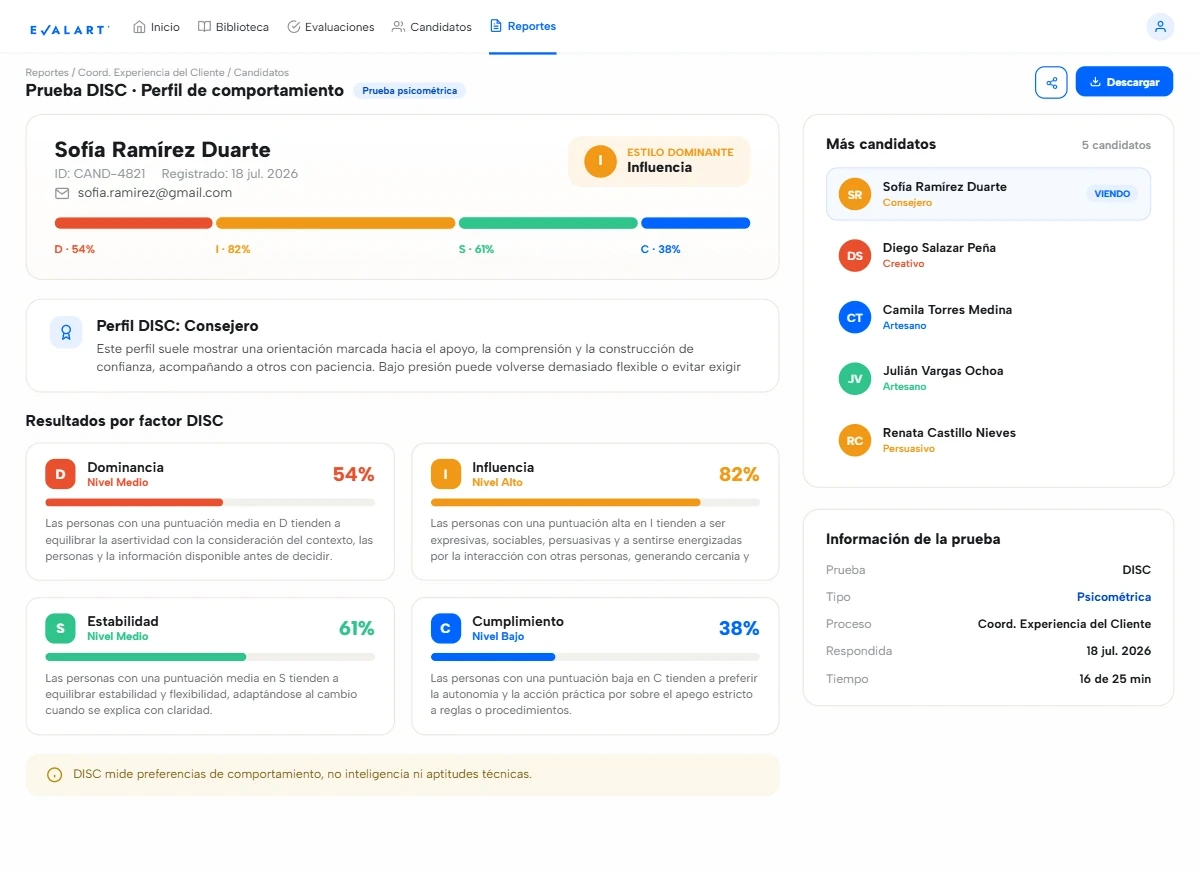
Platforms like Evalart simplify the process of assigning technical, personality, and psychometric tests directly within your workflow. You can explore all available features here.
Additionally, Evalart provides:
- Clear and comparative reports.
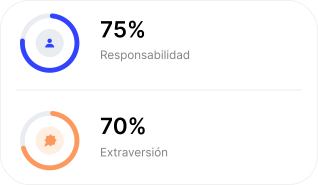
- Selection-focused personality assessments (e.g., to understand work styles and culture fit).
- Workplace psychometric tests and guidelines on when to use them.
Workflow Automation:
Evalart automates test distribution and evaluations, speeding up the process without compromising quality.
If you would like to test these tools in your own process, you can request a free trial.
3. Attract Active and Passive Talent with Targeted Tactics
Active Talent
They are actively looking for a job
- Post job openings on multiple job boards.
- Write clear job descriptions highlighting real benefits and actual challenges.
- Publish engaging posts on LinkedIn and professional networks.
Passive Talent
not actively searching, but open to better opportunities. To attract them:
- Research and directly source matching profiles (via LinkedIn Recruiter).
- Share valuable content (blogs, webinars, events) that sparks interest in your brand.
- Encourage internal employee referrals through incentive programs.
4. Use Data and Metrics to Measure and Iterate
Recruiting without metrics is like navigating without a compass. Essential metrics include:
- Time to Hire: How long it takes to fill an open position.
- Quality of Hire: Performance of new hires after 6 or 12 months.
- Acceptance Rate: The percentage of candidates who accept your job offer.
- Cost per Hire: Total recruiting investment divided by the number of filled vacancies.
Tracking these metrics helps identify bottlenecks and continuously improve your recruitment process.
5. Enhance the Candidate Experience
An organized recruitment process reflects poorly on your company and can damage your employer brand. To elevate the experience:
- Send clear, timely communications.
- Provide constructive feedback whenever possible.
- Ensure the application process is quick and mobile-friendly.
- Maintain transparency regarding timeline expectations and process stages.
6. Incorporate Integrated, Objective Evaluations
Once you attract candidates, you need reliable tools to evaluate their potential. Integrated assessments can include:
- Role-specific technical tests.
- Reasoning and problem-solving evaluations.
- Personality and work-style tests.
- Structured interviews combined with data-driven insights.
Combining these methods minimizes bias and accelerates hiring decisions.
7. Train Your Recruitment Team
Even the best technology relies on human interpretation. Train your team on:
- How to analyze psychometric test reports and talent evaluations.
- How to conduct competency-based structured interviews.
- How to deliver actionable feedback.
This ensures data is translated into sound hiring decisions.

Smarter Recruitment in 2026
Staff recruitment in 2026 demands a strategic, data-driven, candidate-centric approach supported by technology. It is no longer just about filling open seats—it is about building strong teams that drive your business goals.
Tools like Evalart allow you to integrate tests, automate workflows, generate actionable reports, and evaluate candidates objectively, reducing time-to-hire and human error.
Start transforming your recruitment strategies today and attract high-impact talent.