Occupational Socioeconomic Study: What It Is and How to Use It in Your Company
In an increasingly competitive and complex work environment, understanding the real context of your employees or candidates goes beyond reviewing a resume or conducting an interview. The occupational socioeconomic study is a tool that provides a deeper insight into a person’s personal and social situation, which can be key to making more accurate decisions in recruitment, retention, and talent management.
This article will explain what an occupational socioeconomic study is, what aspects it reviews, what it is for, and how to use it ethically and reliably within your organizational processes.

What Is an Occupational Socioeconomic Study?
An occupational socioeconomic study is an evaluation that seeks to understand the life context of a worker or candidate by analyzing personal, family, and social factors that can influence their performance, stability, and adaptation to the work environment.
Unlike other evaluations that measure technical skills or competencies, this study provides information about a person’s socioeconomic reality, helping to understand aspects such as:
- Housing stability
- Family support network
- Economic conditions
- Responsibilities outside of work
Combining this information with other tools, such as structured interviews or psychometric evaluations available on specialized platforms, allows you to view the candidate or employee from a more comprehensive and human perspective.
What Does an Occupational Socioeconomic Study Review?
Occupational socioeconomic studies can vary depending on their depth and purpose, but in general, they usually cover:
1. Family Information and Social Support
It inquires about whom the person lives with, whether they have family dependents (children, elderly adults), and if they have support networks, as this can influence availability, mobility, and commitment.
2. Economic Conditions
Includes variables such as household income, debts, fixed expenses, and financial stability. This helps to understand whether external factors might generate stress or workplace distractions.
3. Education and Continuous Training
Although it is not a replacement for skills assessment, knowing the educational level and access to training resources allows for the guidance of training programs or professional development.
4. Lifestyle and General Well-Being
Aspects such as access to basic services, lifestyle habits, and general health conditions are analyzed, which can influence attendance, productivity, or special needs.
5. Behavior in the Social Environment
Through interviews or surveys, it observes how the person relates to their environment and whether there are risk or support factors that could influence their job performance.
This type of information, when combined with objective data—such as test results, behavioral evaluations, or competencies measured on professional platforms—offers a much richer and more useful overview for decision-making.

What Is an Occupational Socioeconomic Study Used For?
An occupational socioeconomic study has multiple strategic applications in a company:
1. More Precise Selection
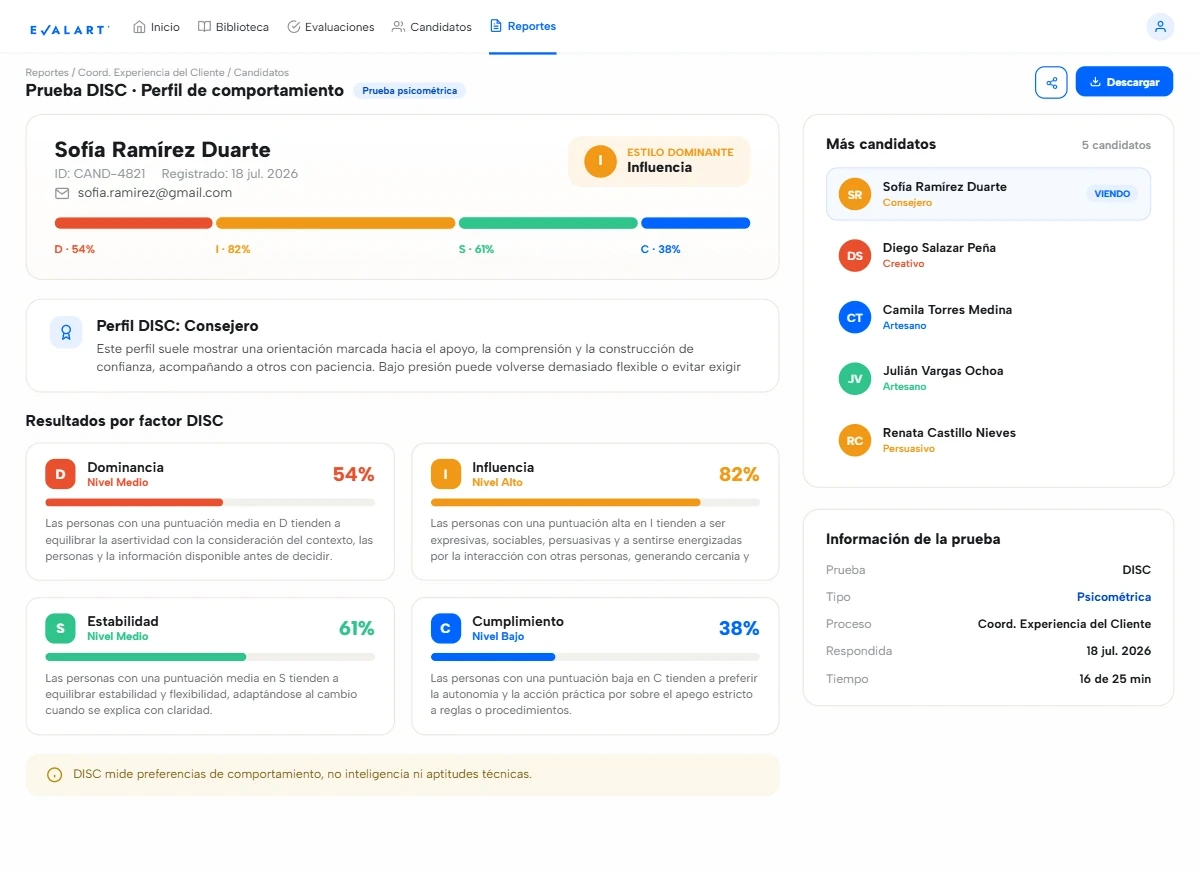
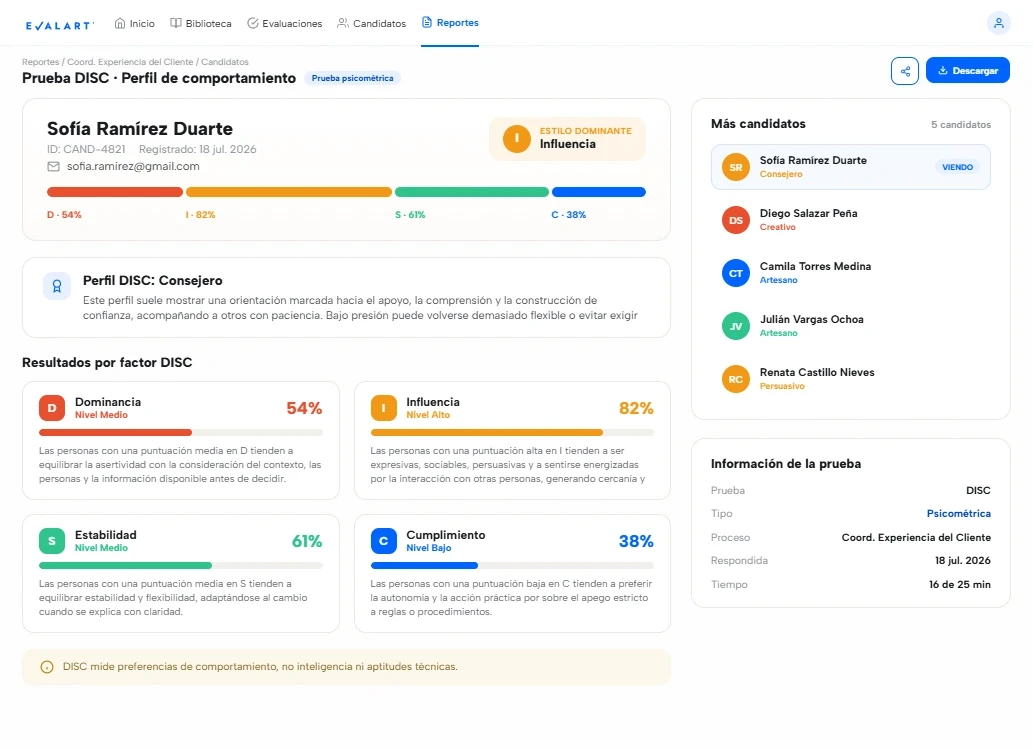
By knowing the context of candidates, recruiters can anticipate potential limitations or support needs. This complements very well with other tools, such as the evaluations available on Evalart, which include personality test, reasoning, and role-specific skills tests.
2. Reduction of Employee Turnover
By better understanding personal circumstances, personalized onboarding, support, and retention plans can be designed, reducing the risk of turnover and improving job satisfaction.
3. Human Development and Organizational Well-Being
Socioeconomic studies help detect needs for training, support, or reasonable adjustments that improve the overall well-being of employees, which directly impacts productivity.
4. Designing More Human Compensation Strategies
With this information, compensation policies can be better tailored to workers’ realities without losing internal equity or external competitiveness.
How to Apply an Occupational Socioeconomic Study Ethically and Reliably
For these studies to add real value and respect people’s privacy, it is essential to:
- Inform and obtain consent: Clearly explain why the study is being conducted and how the information will be used.
- Ensure confidentiality: The collected information must be handled with high standards of security and ethics.
- Integrate with other evaluations: Use the study as another input within a structured process that includes interviews, psychometric tests, and competency analysis. If you want to optimize your entire selection process with integrated evaluations, platforms like Evalart allow you to do so automatically and with clear reports.
- Train the team conducting the study: Ensure that those who administer and analyze the study have clear training and guidelines to avoid bias or misinterpretation.
- Use data for informed decisions: Do not interpret results in isolation; combine them with other evidence to get a comprehensive view of the candidate or employee.
Additionally, if you are considering applying these evaluations as part of a broader strategy, you can explore the platform’s full features and start with a free trial.
A well-executed occupational socioeconomic study offers a deep and contextualized look at a worker’s or candidate’s life environment, which in turn significantly improves the quality of your decisions in selection, development, and retention.
By integrating it with other objective evaluations, such as psychometric and technical tests, you will achieve a more reliable, human, and strategic view of every person in your organization.
Investing in robust evaluation processes is investing in sustainable talent. Today, tools exist to help you automate, measure, and compare results efficiently and with actionable data.