Evaluating Soft Skills with Recruitment Tools

This article highlights how evaluating soft skills, such as problem-solving and emotional intelligence, is essential in talent selection and how advanced recruitment tools facilitate this process.

Evaluating Soft Skills in Recruitment

Adaptability and innovation in talent selection have become crucial elements in today’s corporate landscape. Technical skills and hard skills are no longer the only critical factors determining a candidate’s success. Modern recruitment requires looking beyond academic qualifications, technical knowledge, and previous work experience.

This evolution in hiring processes has increased the importance of soft skills. These intangible abilities, capabilities, and personal strengths have become key indicators of long-term success, employee adaptability, and organizational growth.

In this article, we explore why evaluating soft skills is an essential component of effective recruitment and how Evalart facilitates this process through flexible and accurate recruitment tools.

The Shift Toward Soft Skills in Hiring Processes

In a job market where technical skills can be learned and academic backgrounds are no longer as strong a differentiator as they once were, soft skills have become a true distinguishing factor among candidates.

Facing rapid changes and increasing complexity in the workplace, soft skills such as emotional intelligence, problem-solving, and decision-making under pressure are becoming increasingly valuable competencies.

As the labor market continues to evolve, these abilities have become essential elements for identifying leadership potential and collaboration capabilities among team members.

The paradigm shift toward soft skills in modern hiring reflects a more nuanced understanding of professional success. It is no longer only about what employees can accomplish individually, but also about how their contributions strengthen the collective performance of the organization.

As a result, soft skills have become essential elements for building dynamic teams and promoting a productive work environment.

Recruiters are now looking for evidence of critical thinking and the ability to make quick and accurate decisions, particularly in high-pressure situations that are increasingly common in today’s workplace. These qualities among company employees can make the difference between an organization that simply survives and one that thrives in the face of change.

Evalart: Defining the Standard in Soft Skills Assessment

Soft skills assessments make it easier to understand how an individual can influence and enhance overall business performance.

Human Resources teams are recognizing that employees with strong interpersonal skills are often better at mediating conflicts, motivating team members, and promoting an inclusive and collaborative work culture. But how can organizations identify these candidates during the selection process? Through psychometric assessments.

By integrating soft skills evaluations through psychometric tests, companies can select candidates who not only meet the specific skills required for a role but also complement the existing team dynamics.

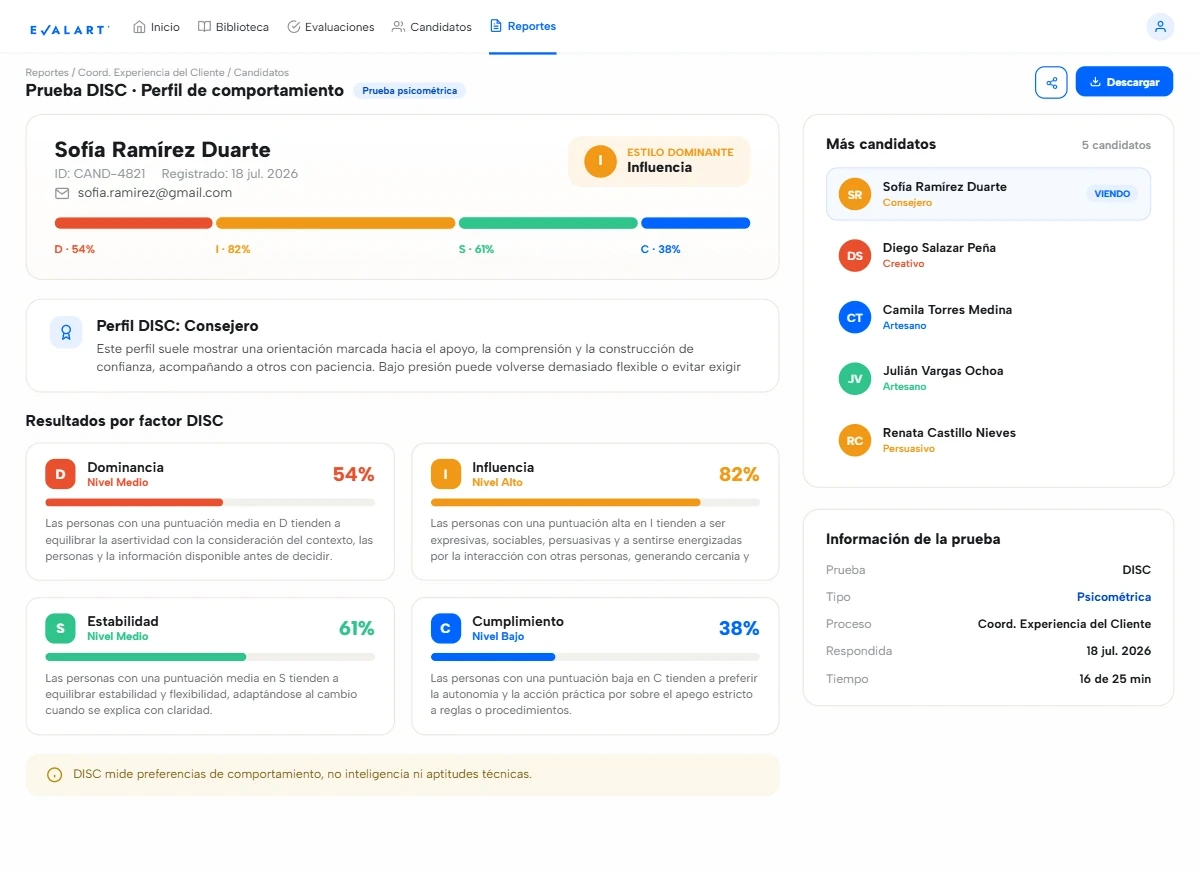
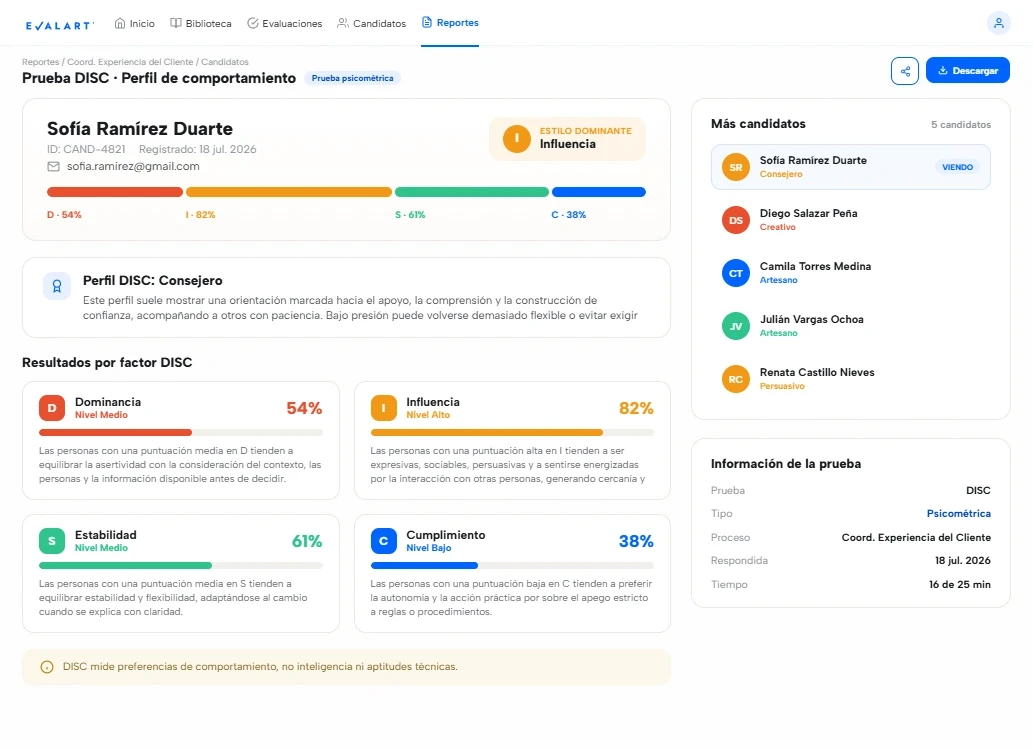
The soft skills assessments provided by Evalart help identify these competencies. Through the Evalart catalog, recruiters have access to online psychometric tests that allow them to accurately measure different interpersonal skills and look beyond a candidate’s resume.

The Impact of Evaluating Soft Skills on Organizational Effectiveness

Assessing soft skills during recruitment processes creates a positive ripple effect on organizational effectiveness. Beyond simply selecting suitable candidates for specific roles, a comprehensive evaluation of soft skills prepares companies to face challenges, improve employee retention, and foster a positive workplace environment.
Improving Collaboration and Communication

Improving Collaboration and Communication

Soft skills such as effective communication and empathy are essential for fostering meaningful collaboration within organizations. Employees who excel in these areas tend to improve team outcomes and strengthen interpersonal relationships.

By focusing on these skills during the selection process, companies can improve employee morale, which is increasingly important in work environments that rely on teamwork and interdependence.

Encouraging Innovation and Creativity

Individuals with well-developed soft skills, such as critical thinking and problem-solving abilities, often become agents of change within organizations. They can approach complex challenges with innovative solutions and quickly adapt to new workplace conditions, driving continuous innovation.

By identifying and developing these skills, companies establish a strong foundation for adaptability and creativity. This supports the development of innovative services and products, as well as improvements to internal processes.

Contribution to Organizational Culture

Soft skills are also essential for building and maintaining a positive organizational culture.

Employees who demonstrate high emotional intelligence and strong communication skills contribute to a more supportive and respectful work environment. This helps attract high-quality talent and reduce employee turnover rates.

Reduction of Workplace Conflicts

A comprehensive soft skills assessment reduces the likelihood of workplace conflicts by ensuring that new employees can effectively manage disagreements and challenging situations. This leads to smoother and less disruptive daily operations, allowing leaders to focus on growth strategies rather than resolving internal disputes.

Through Evalart’s services, companies can implement these types of assessments to strengthen their human resources processes and improve talent selection.

Advanced Tools for More Human-Centered Recruitment

Integrating online tools such as those offered by Evalart means embracing a more human approach to talent selection. Companies that use these solutions are better equipped to evaluate and incorporate emotional intelligence and problem-solving abilities into their organizations—competencies that are becoming increasingly decisive in today’s job market.

Implementing a comprehensive soft skills assessment within recruitment processes goes beyond improving the quality of new hires. It positively impacts nearly every aspect of organizational operations, from internal efficiency to the company’s external reputation. This demonstrates that investing in the proper evaluation of soft skills is, in fact, an investment in the sustainable future of the organization.

Evaluating soft skills is a necessity that reflects the depth of human capital beyond traditional recruitment formats. Evalart addresses this need with solutions that measure critical competencies in a simple, practical, and accessible way through fully online assessments.

If you are looking to lead in talent recruitment and improve employee retention, contact the Evalart team by submitting a quote request and transform the way your company approaches talent selection.

Investing in soft skills assessment is investing in the future. We invite you to explore our blog to understand how online psychometric assessments can revolutionize your talent selection strategy.

Other similar news articles

Mastering Teacher Interview Questions: A Guide for Hiring Managers

Mastering Teacher Interview Questions: A Guide for Hiring Managers Hiring the right teacher is crucial for maintaining the quality of education and fostering a positive…

Read More
What Should You Ask in a Job Interview to Evaluate Beyond the CV?

Knowing what to ask in a job interview can make the difference between a strategic hire and a decision based on intuition. A CV presents…

Read More
How to use logical reasoning tests for selection processes?

Logical reasoning tests are a type of assessment that allows measuring a person's abilities to analyze, evaluate, and solve complex problems. These tests are used…

Read More