The Importance of Honesty and Integrity in the Workplace

This article explores why honesty is not only a desirable quality but a necessity in the workplace, and how it can be effectively assessed and fostered within organizations.

Honesty and integrity are essential for fostering a transparent work environment that positively impacts team performance. They are also fundamental qualities for building and maintaining trust among employees, colleagues, and leadership.

Regardless of the position a candidate is applying for, organizations should include at least one assessment in the recruitment process that helps identify these values.

In this article, we explore why these qualities are essential and how they can be assessed and encouraged within organizations.

Why Are Honesty and Integrity So Important?

The Foundation of Workplace Trust

A workplace where honesty prevails allows employees to feel secure and respected, which in turn enhances collaboration and efficiency. This creates the conditions for productive brainstorming sessions, effective teamwork, and a positive work environment that supports growth and innovation.

Preventing Conflict and Corruption

Maintaining high standards of integrity in the workplace helps prevent conflicts and reduces the risk of unethical behavior and corruption. This leads to a cleaner, more ethical work environment where employees can focus on achieving the organization’s goals without unnecessary distractions or ethical concerns.
By fostering a collaborative workplace culture that prioritizes the organization’s objectives before individual interests, companies create stronger, more cohesive teams.

Integrity Assessment: Identifying Honesty and Integrity Within Your Team

Integrity Assessments: Integrity and trust assessments are valuable tools for identifying candidates who not only possess the technical skills required for the role but also demonstrate a strong ethical foundation. These assessments typically use hypothetical scenarios in which the “correct” answer is not obvious, allowing recruiters to better understand a candidate’s motivations and decision-making process.

Examples of Integrity Assessments

  1. Ethical Dilemma Scenarios
  • Situation: The candidate is presented with a scenario in which they must choose between reporting unethical behavior by a coworker who is also a close friend or remaining silent to protect the friendship.
  • Evaluation: The candidate’s response can reveal how they prioritize integrity versus personal loyalty, providing insight into their ability to navigate ethical conflicts.
  1. Character Assessment Questions
  • Situation: The candidate is asked how they would handle a situation in which they discover discrepancies in a financial report that could benefit the company in the short term.
  • Evaluation: The objective is to understand whether the candidate values honesty and transparency or is more likely to overlook the issue for potential personal or organizational gain.
  1. Decision-Making Simulations
  • Situation: The candidate is placed in the role of a manager who must choose among several courses of action during a crisis affecting both the organization and its employees.
  • Evaluation: This assesses the candidate’s ability to make ethical decisions under pressure while considering the long-term impact of their actions on the interests of all stakeholders involved.

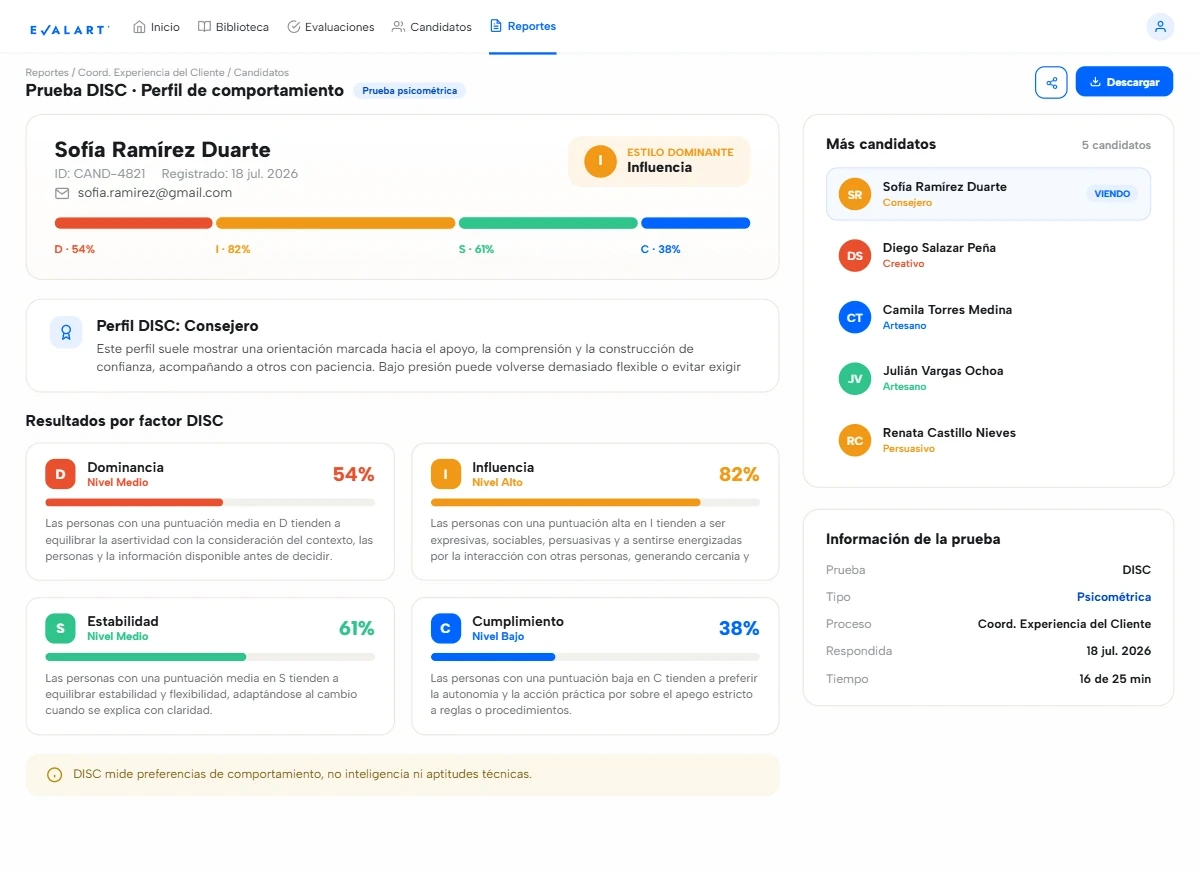
Evalart offers a comprehensive catalog of assessments that improve employee selection by evaluating candidates from multiple perspectives, helping organizations identify their values and predict how they may respond in complex situations.

Interviews and Ongoing Assessments

In addition to initial assessments, it is essential to conduct ongoing evaluations of honesty and integrity. This helps ensure that employees continue to uphold the organization’s values while reinforcing ethical behavior over time.

It is also important to involve team leaders in these online assessments or face-to-face interviews. Establishing a regular process for evaluating and reinforcing organizational values with leaders helps companies create clear examples of ethical behavior through effective leadership.

Fostering an Ethical Workplace Culture

Clear Policies and Training: Establishing clear policies and providing ongoing ethics training are essential steps in fostering a culture of integrity. Policies should be clearly communicated to all employees, and ethics training should become an integral part of the corporate culture. These policies should also define sanctions, consequences, and conflict resolution procedures.

Recognition and Rewards: Recognizing and rewarding employees who consistently demonstrate honesty and ethical behavior creates positive incentives and helps reinforce a transparent and ethical workplace culture.

Honesty and integrity are fundamental to an efficient workplace. These values form the foundation of successful and sustainable business operations. By actively assessing and promoting these qualities, organizations can create a healthier, more productive work environment.

Contact us or start a free trial to discover how Evalart can improve your recruitment and hiring process.

Other similar news articles

Hiring Freelancers or Employees: Pros and Cons of each one

Most of us grew up watching our parents, and even grandparents, work 20, 30, and even 40 years in the same company, faithful and dedicated…

Read More
How to ensure diversity in selection processes

Many specialists in recruitment and selection of personnel and management agree that a diverse team allows organizations to be more innovative, creative and achieve better…

Read More
How to Test Figma Knowledge in Interviews

How to Test Figma Knowledge in Interviews When hiring for design roles, assessing a candidate's proficiency with industry-standard tools like Figma can be challenging. It’s…

Read More