Interview Questions for Assessing Soft Skills
Soft skills are just as critical as technical skills in the workplace. These competencies, including effective communication and teamwork, often determine an employee’s long-term success within an organization.
Soft skills are frequently underestimated compared to hard or technical abilities. However, they are essential for building strong teams and contributing to overall organizational success.
This article explores effective techniques for assessing soft skills during interviews and how they can positively impact hiring outcomes.
What Are Soft Skills?
Soft skills refer to the interpersonal abilities and emotional intelligence that enable effective interaction and communication between individuals.
They include empathy, active listening, problem-solving, adaptability, and the ability to collaborate effectively with others.
These skills allow individuals to navigate workplace environments, build productive relationships, work collaboratively, and make ethical and effective decisions under pressure.

The Importance of Soft Skills in the Workplace
Soft skills allow employees to navigate their workplace environment, collaborate effectively with others, deliver high-quality work under pressure, and change direction when strategies are not producing the desired results.
Despite their importance, these competencies are more difficult to evaluate objectively than technical skills because they are less tangible and often depend on specific contexts and situations.
Employees with strong soft skills tend to perform better in roles that require cross-functional collaboration, communication, and adaptability to change. Identifying these abilities during interviews improves hiring quality by helping organizations build a stronger and more cohesive workplace culture.
Unlike technical or “hard” skills, which are usually related to specific tasks or knowledge areas, soft skills are flexible and transferable across positions and industries. These skills include, but are not limited to:
- Effective Communication: The ability to express ideas clearly, as well as actively listen and understand the perspectives of others.
- Teamwork: The ability to collaborate with others to achieve common goals while demonstrating empathy, respect, and cooperation.
- Adaptability: The ability to adjust to changes and new circumstances in the workplace, maintaining flexibility and a positive attitude in uncertain situations.
- Problem-Solving: The ability to identify challenges, analyze possible solutions, and implement effective approaches.
- Work Ethics and Professionalism: A commitment to ethical values and behaviors that demonstrate integrity, accountability, and responsibility.
- Time Management: The ability to prioritize tasks, organize responsibilities, and meet established deadlines efficiently.
- Leadership: The ability to inspire, guide, and motivate others effectively toward achieving common goals.
- Emotional Intelligence: The ability to understand and manage one’s own emotions, as well as recognize and respond appropriately to the emotions of others in order to maintain healthy interpersonal relationships.

Effective Techniques for Evaluating Soft Skills
Using Behavioral Interview Questions
Behavioral questions allow candidates to demonstrate how they have applied their soft skills in real-life situations. Examples include:
- “Describe a time when you faced a workplace conflict caused by a mistake you made. How did you handle it?”
- “Can you describe a situation where your opinion differed from the rest of your team? How did you resolve it?”
- “Tell me about a time when you led a project under pressure. What approach did you use to ensure everyone participated effectively?”
Task Simulations
Task simulations allow candidates to demonstrate their soft skills in a controlled environment.
These exercises provide recruiters with valuable insights into how candidates communicate, collaborate, make decisions, and respond to challenges in situations that resemble real workplace scenarios.
These simulations provide valuable insights into candidates’ communication skills, empathy, stress management, and ability to respond effectively in workplace situations.
Structured Interviews
Maintaining a structured interview format helps evaluate soft skills in a fair and consistent way. This approach provides a more complete candidate profile, going beyond what is presented in a résumé.
Structured interviews ensure that each candidate is assessed based on their strengths, interpersonal abilities, and potential to integrate into the company culture.
Online Assessment Tools
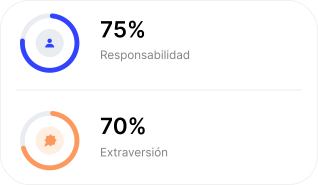
Online assessments make it easier to evaluate soft skills through hypothetical scenarios and targeted behavioral tests that can measure competencies ranging from leadership abilities to risk tolerance.
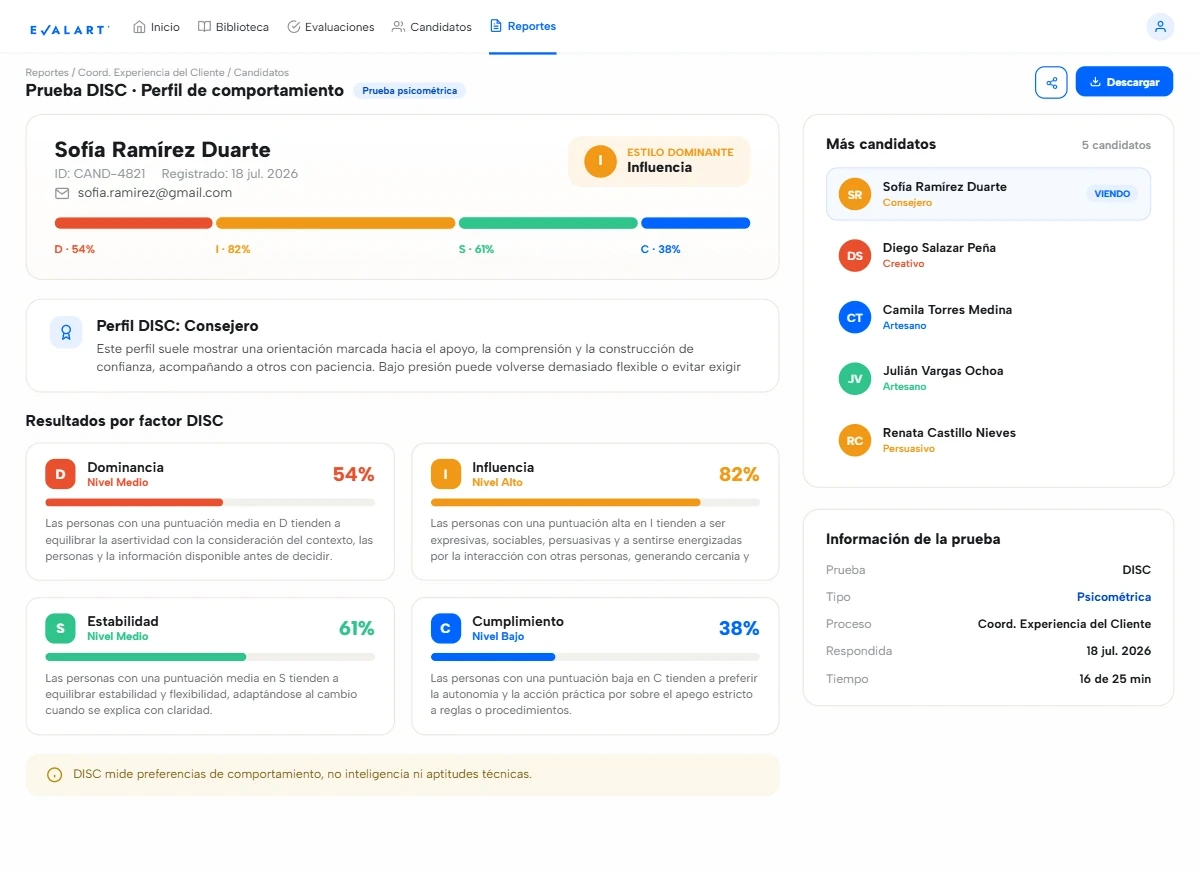
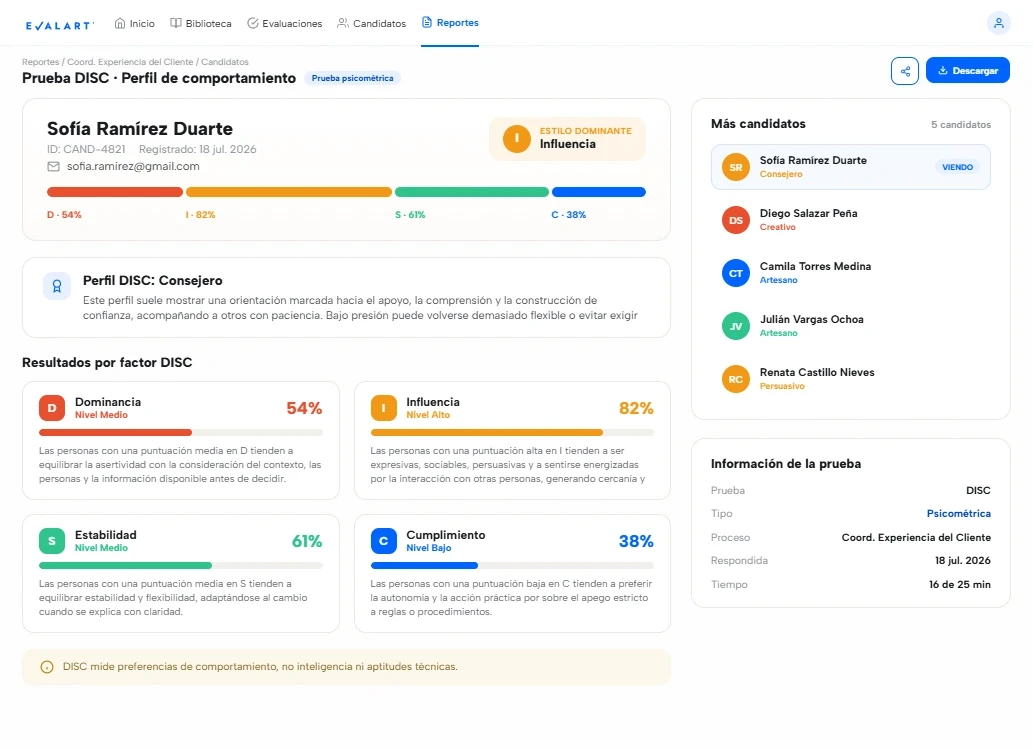
Incorporating specific soft skill assessments, such as those offered by Evalart, is an effective way to complement traditional interviews and gain deeper insights into candidate profiles.
By implementing effective methods for evaluating soft skills, organizations can ensure that candidates not only meet the technical requirements of a position but also possess the interpersonal competencies needed to succeed in today’s workplace.
Improve your recruitment process with Evalart. Discover how we can help you efficiently and effectively evaluate the soft skills of your candidates. Explore our extensive catalog of online assessments or take a free trial.