Consequences of Staff Turnover

Consequences of staff turnover and how to reduce it

Staff turnover is a common phenomenon in any company, but when it becomes high or is not well managed, it can become a serious problem. It is not just about one person leaving and another arriving; the consequences of turnover affect productivity, the work environment, costs, and the continuity of processes.

In this article, we review what staff turnover means, why it occurs, what its most frequent effects are, and, most importantly, how you can anticipate and reduce it with data-driven strategies and Human Resources best practices.

What are the causes of staff turnover and its consequences?

Staff turnover can occur for multiple reasons. Some are inevitable, such as personal reasons of the employee, but many others are indicators of internal problems that can be managed or improved.

Common causes:

  • Lack of professional growth or development.
  • Non-competitive salaries or benefits.
  • Poor leadership or bad team management.
  • Unbalanced workloads.
  • Poor internal communication.
  • Lack of recognition or motivation.

Main consequences:

  • Loss of knowledge and experience: Every departure also represents a loss of tacit information that is not always documented.
  • Impact on productivity: The time it takes to fill a vacancy, train a replacement, and reach the expected performance generates delays.
  • Affected work environment: High turnover can generate insecurity or demotivation among those who stay.
  • Recruitment and training costs: Publishing vacancies, evaluating candidates, applying tests, and offering training has a tangible cost for the company.
  • Interruption of key processes: When a key employee leaves, important processes can be temporarily paralyzed.

Identifying the causes and consequences helps you not only to react but to act preventively to improve team stability.

What does staff turnover imply?

Staff turnover is not just a number in an HR report. It has implications at various levels of the organization:

  • Economic: Direct costs for recruitment, selection, testing, and training; and indirect costs due to low productivity.
  • Operational: Project delivery is delayed, the workload of those who remain increases, and errors may arise due to lack of experience.
  • Cultural: If personnel with aligned values leave, the organizational culture is diluted with each departure.
  • Reputational: High turnover can affect the employer brand, making it difficult to attract talent in the future.

By understanding what it implies, you can make more informed strategic decisions.

A group of four people gathers around a laptop in an office. Three are standing, engaged and smiling, while a woman is seated pointing at the screen. The atmosphere is collaborative and positive.

What are the consequences of high staff turnover?

High and frequent turnover can trigger negative effects on different fronts:

1. Increased recruitment and training expenses

Every vacancy you leave open or fill with a replacement involves resources in advertising, evaluations, interviews, and training.

2. Loss of productivity

While the new employee adapts, the pace of work is likely to slow down or other employees may have to take on additional tasks.

3. Decline in team morale

Constantly seeing colleagues leave can affect the emotional well-being of those who stay and reduce commitment to the company.

4. Decrease in work quality

Lack of continuity and experience can lead to errors, delays, or inconsistent results.

What can high staff turnover indicate in an organization?

High turnover is not usually an isolated problem, but a warning sign that something in the company requires attention:

  • Non-competitive salary structure: Employees may leave in search of better economic conditions.
  • Unsustainable workload: Burnout is a major factor in resignations.
  • Lack of growth opportunities: The absence of clear development paths can demotivate employees.
  • Leadership problems: The relationship with supervisors is one of the main factors for retention.

Detecting these signals in time allows you to develop personalized strategies to retain relevant talent.

What are the types of staff turnover?

Turnover can be classified in several ways according to its origin or impact:

1. Voluntary turnover

When the employee decides to leave for their own reasons: better opportunities, career change, personal reasons, etc.

2. Involuntary turnover

Occurs when the company decides to end the employment relationship due to poor performance, restructuring, or organizational reasons.

3. Functional turnover

It is natural and expected within certain ranges—for example, when it happens due to internal mobility or planned growth.

4. Dysfunctional turnover

Represents a critical departure that negatively affects the organization, such as losing a key person without a succession plan.

A person in a suit uses a tablet displaying bar charts, surrounded by documents, a calculator, and a yellow mug, conveying a focused business environment.

How to reduce staff turnover?

Understanding the causes and consequences allows you to design effective strategies to reduce it. Some recommended practices include:

1. Offer clear growth paths

Employees who see development opportunities tend to stay longer. Design career plans and continuous training.

2. Evaluate and adjust your salary structure

Competitive salaries and benefits are essential to retain talent. Make sure you have a clear salary structure aligned with the market.

3. Improve the organizational climate

Foster open communication, recognition, and organizational culture. A positive environment increases commitment.

4. Incorporate objective evaluations

Tools such as psychometric, technical, and skills tests help identify people who not only meet the technical profile but also fit the culture.

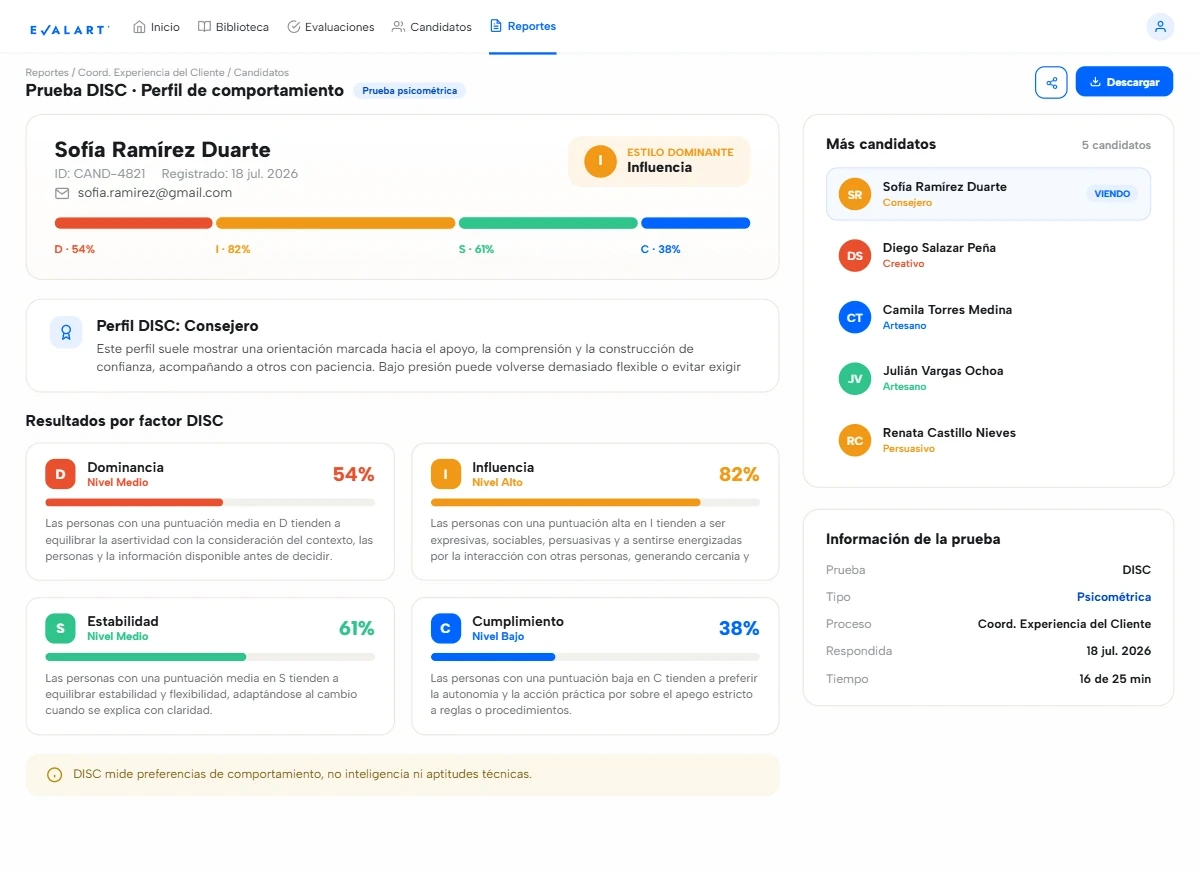
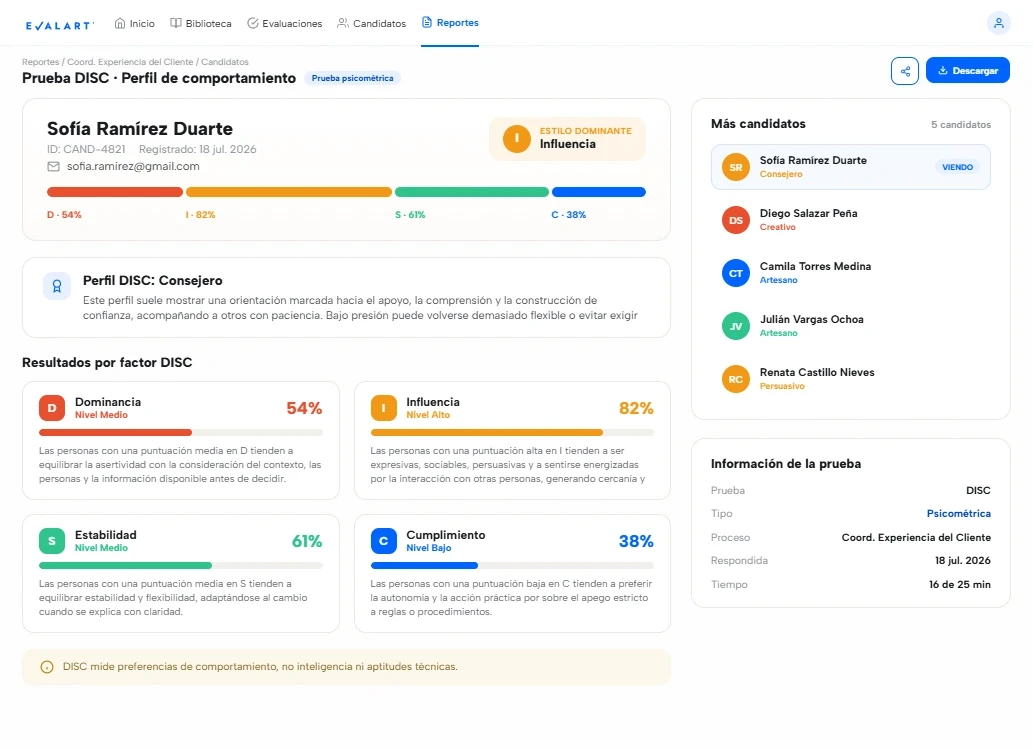
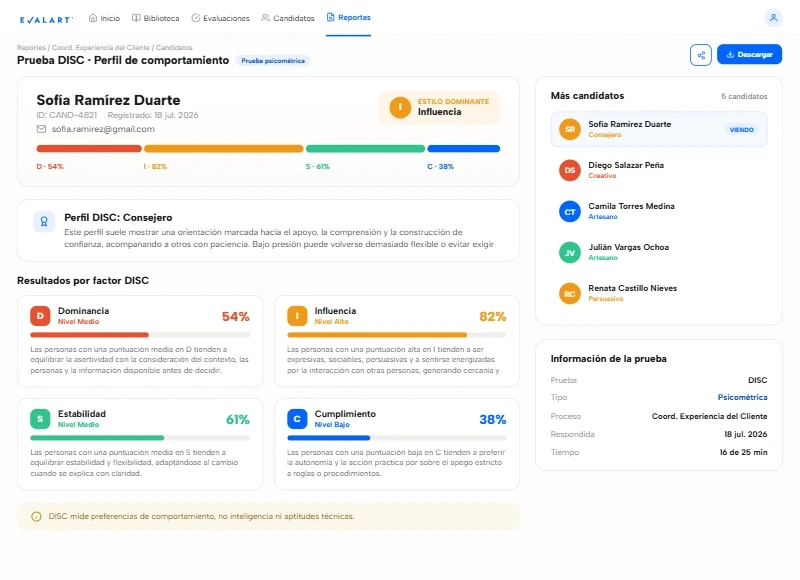
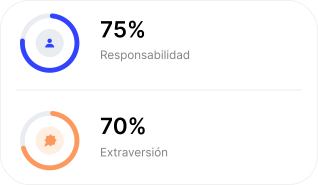
Evalart offers a platform with a wide catalog of evaluations and metrics that can facilitate this process:

Discover all the available features of our platform so you can incorporate evaluations that make it easier to keep employees happy and reduce staff turnover.

5. Analyze turnover metrics

Measure indicators such as:

  • Turnover by department or role.
  • Turnover by department or role.
  • Average length of stay.
  • Reasons for leaving.

This data will help you define priorities and more accurate strategies. Explore the specific tests and assessments of our psychometric testing platform.

Staff turnover is a complex phenomenon with economic, operational, and cultural impact on any organization. However, by understanding its causes and consequences, concrete strategies can be designed to retain talent, improve the employee experience, and make your selection and development processes more efficient.

Investing in smarter evaluation processes, such as those offered by Evalart, not only improves the quality of your hires but also helps you build more stable and committed teams.

Discover how it works and how we can help you.

Other similar news articles

How to ensure diversity in selection processes

Many specialists in recruitment and selection of personnel and management agree that a diverse team allows organizations to be more innovative, creative and achieve better…

Read More
Maximizing Potential: The Terman Merril Test in Employee Selection

Terman Merril Test in Employee Selection In a business world that increasingly values mental agility and adaptability, evaluating cognitive processes has become an essential component…

Read More
9 Benefits of working from home

Many of us started working from home because of the pandemic, some even before, technology has allowed us to be more connected than ever, being…

Read More