Soft Skills Assessment Test and PDF Guide

In an increasingly competitive and automated job market, technical skills alone are no longer enough. Soft skills have become a key differentiator in recruitment processes. If you are looking for a test to measure soft skills, this article explains everything you should consider when incorporating one into your hiring process.

Knowing how to assess soft skills correctly is essential for hiring the right candidates and building resilient, collaborative, and efficient teams.

In this article, we will explain the most commonly used methods and tools for soft skills assessment, the most common mistakes made when evaluating them during interviews, and how to avoid bias. We also share a free PDF guide to help you structure your assessment process clearly and objectively.

How are skills assessed?

Let’s start with an overview of candidate assessment. During the recruitment process, evaluating skills is a fundamental step in ensuring a successful hire.

Interviews, technical assessments, group exercises, and simulations are commonly combined to observe how a person reacts to real situations related to the role. These assessments can measure everything from specific knowledge to adaptability, problem-solving abilities, and proficiency with particular tools.

However, one type of skill is more difficult to assess using traditional methods: soft skills. Competencies such as empathy, communication, and critical thinking are not easily reflected in a résumé, an in-person interview, or a technical assessment. For this reason, they require a different and more structured approach to be measured correctly. Below, we explore their importance and how to assess them effectively.

Why are soft skills important?

According to the World Economic Forum, by 2025 some of the most valued workplace skills will include critical thinking, people management, complex problem-solving, and emotional intelligence. These competencies directly influence organizational culture and team productivity. However, assessing them remains a challenge.

How are soft skills typically measured?

Soft skills cannot be measured in the same way as technical knowledge. A test to measure soft skills primarily incorporates situational exercises. These tests often include multiple-choice questions, hypothetical scenarios, behavioral scales, and practical exercises designed to reveal how a person thinks, acts, and communicates in workplace settings.

For example, a candidate might be presented with a conflict between team members and asked how they would respond, or asked to prioritize tasks when faced with an unexpected workload.

You can read more about this topic in this Emeritus article

Who should measure soft skills and why?

Assessing soft skills is useful at different stages of the talent lifecycle, not only during recruitment but also for employee development and training within the company. Here is why it matters for each group:

  • Recruiters: They need to determine not only whether a candidate can do the job, but also whether they can successfully integrate into the team and adapt to the organizational culture. Assessing skills such as communication, empathy, and conflict resolution from the first interview can help predict future performance and reduce employee turnover.
  • Team leaders: Understanding the soft skills of their team members allows them to assign tasks more strategically, encourage collaboration, and prevent conflicts. They can also use this information to provide more useful feedback and propose professional development paths.
  • Candidates: Self-assessment helps candidates prepare more effectively for interviews, apply for roles that genuinely match their profile, and develop competencies they have not yet mastered. It also strengthens self-awareness and adaptability, two skills that are increasingly valued in today’s workplace.

Methods for measuring soft skills

There are several methods for assessing soft skills, and their effectiveness depends on the context and purpose of the assessment. Because these skills are less tangible than technical skills, they require tools that make it possible to observe behaviors, attitudes, and responses to real or simulated situations.

Some of the most commonly used methods include psychometric tests, competency-based interviews, situational assessments, and gamified assessments.

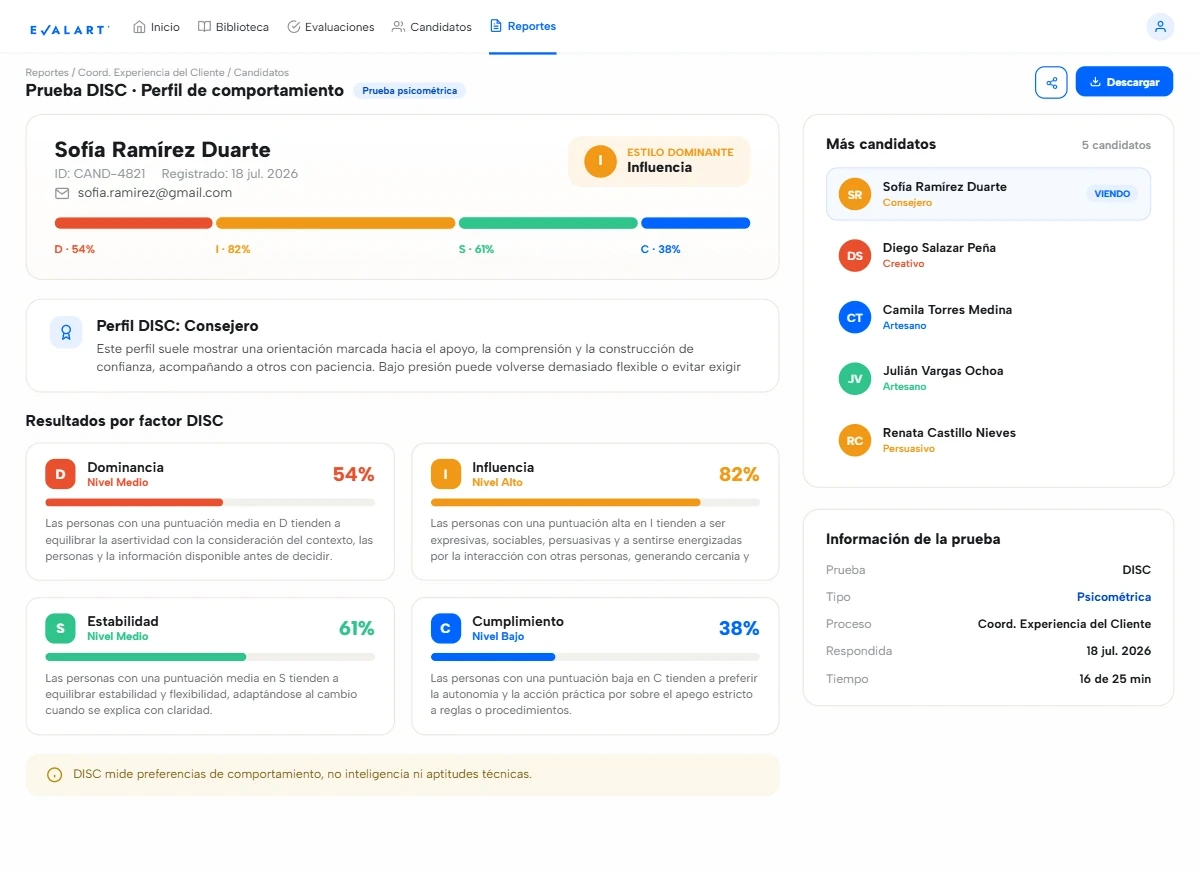
For example, a psychometric test can measure a candidate’s level of empathy or adaptability, while a structured interview can assess their ability to resolve conflicts. Group exercises, on the other hand, make it possible to observe teamwork and emotional management in real time. When applied correctly, these methodologies provide valuable data for making objective decisions and building higher-performing teams.

How can you measure soft skills development?

Measuring soft skills development not only helps establish each employee’s starting point but also makes it possible to identify tangible progress over time. Continuous assessment is essential for designing personalized training plans, promoting a culture of continuous improvement, and strengthening team performance.

It also facilitates clearer conversations between leaders and employees about professional growth and opportunities within the organization. Some effective methods include:

  • Self-assessments: Useful for identifying strengths and weaknesses.
  • 360-degree assessments: Gather feedback from peers, leaders, and direct reports.
  • Assessment rubrics: Define acceptable or excellent levels of performance.
  • Employee climate or engagement surveys: Reflect interpersonal dynamics.

Evalart offers customizable questionnaires that make it possible to adapt these methods: view available assessments

How can recruiters measure soft skills correctly?

Measuring soft skills correctly is essential for making better hiring decisions. However, many recruiters encounter obstacles when doing so. Below, we explain the most common mistakes and why it is important to avoid them:

  1. Confusing attitude with skill: Being friendly or extroverted does not necessarily mean that someone possesses skills such as leadership or conflict resolution. Hiring based solely on attitude can lead to significant mismatches with the role and create frustration within the team.
  2. Not using a clear structure: When interviews are not standardized, objectively comparing candidates becomes difficult. This can result in biased decisions, poor hiring choices, and wasted time if the process needs to be repeated.
  3. Not defining the skills required for each role: Not every position requires the same competencies. For example, an analyst needs critical thinking and attention to detail, while a manager needs leadership and communication skills. Failing to define these requirements from the beginning can lead to hiring candidates who are technically qualified but poorly aligned with the organization’s culture.
  4. Falling victim to cognitive biases: Choosing a candidate based on personal affinity or first impressions can exclude more suitable options. Confirmation bias, for example, causes people to look for answers that validate what they already believe rather than assessing candidates objectively.
  5. Not using reliable tools: Relying solely on intuition without the support of standardized assessments limits the quality of the process. Using tools such as psychometric tests, structured questionnaires, and simulations provides real and measurable information about a candidate’s behavior.

The consequences of failing to assess soft skills correctly can range from a poor workplace environment to high employee turnover, low team performance, and wasted resources. Implementing an appropriate assessment process is therefore an investment in your organization’s success.

Skills assessment tools for professionals

Having a comprehensive assessment tool can make the difference between a superficial recruitment process and a truly effective one. A well-structured platform allows organizations to administer different types of assessments, standardize criteria, and generate comparable reports that facilitate decision-making. This is particularly useful when assessing soft skills, which tend to be more subjective and complex to measure.

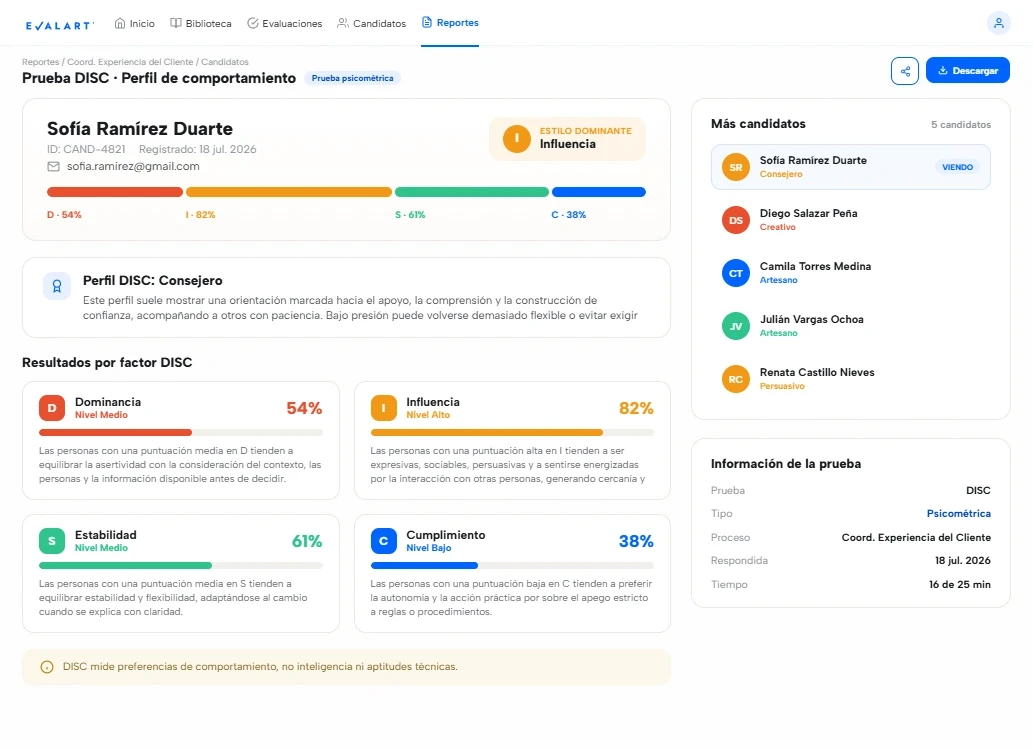
Evalart is a comprehensive solution that enables organizations to administer psychometric tests, competency-based questionnaires, situational assessments, and structured interviews. It also offers automated assessments such as attention-to-detail tests and interviews based on the STAR methodology.

Our flexible and customizable approach adapts to different profiles and stages of the recruitment process, enabling a more comprehensive and objective assessment through tools such as attention-to-detail tests and interviews using the STAR methodology

Download the Soft Skills Assessment Guide in PDF format at the end of this article to better understand why these skills are important. It includes sample questions, interview structures, and common mistakes you should avoid.

FAQ: How are soft skills measured?

What is a test for measuring soft skills?
It is an assessment designed to identify competencies such as communication, empathy, leadership, and teamwork.

What does a soft skills test measure?
It measures behaviors, personality traits, and attitudes that are useful in collaborative and professional environments.

What is the best free test for measuring soft skills?
It depends on the role. Evalart offers a broad catalog of online assessments, and you can try the platform through a free trial here: Evalart Free Trial

What is Evalart?
Evalart is a platform that offers psychometric, technical, and customizable assessments for measuring hard and soft skills. Its automated approach helps improve recruitment and talent development processes. Learn more about how it works here: How Evalart Works


Quick Guide: How to Integrate Soft Skills Assessment

Other similar news articles

Psychometric Assessments: Decoding the Modern Leader

Workplace psychometric assessments allow organizations to identify candidates with personality traits and competencies that go beyond what a résumé can reveal. For example, emotional intelligence…

Read More
Top Digital Marketing Tools Candidates Should Know

Must-Know Digital Marketing Tools for Candidates (and How to Test Proficiency) When it comes to hiring a digital marketer, it’s no longer just about creativity…

Read More
How to evaluate the creativity of a candidate in a selection process?

In today's work world, creativity is a highly valued skill in candidates for any job position. However, evaluating this skill in recruitment processes is not…

Read More